
All About Forest Skiing - and Where to Find the World's Best Tree Runs
Skiing through a forest is a completely different sensation from carving down wide, open pistes. First, the sound changes - noise from lifts and other skiers fades away, replaced by the soft swoosh of each turn and the whisper of snow brushing past tree trunks. The light shifts as it filters through branches; the terrain rises and dips; and every few metres you have to choose your line - left of that spruce, right of that birch, or straight over that little bump?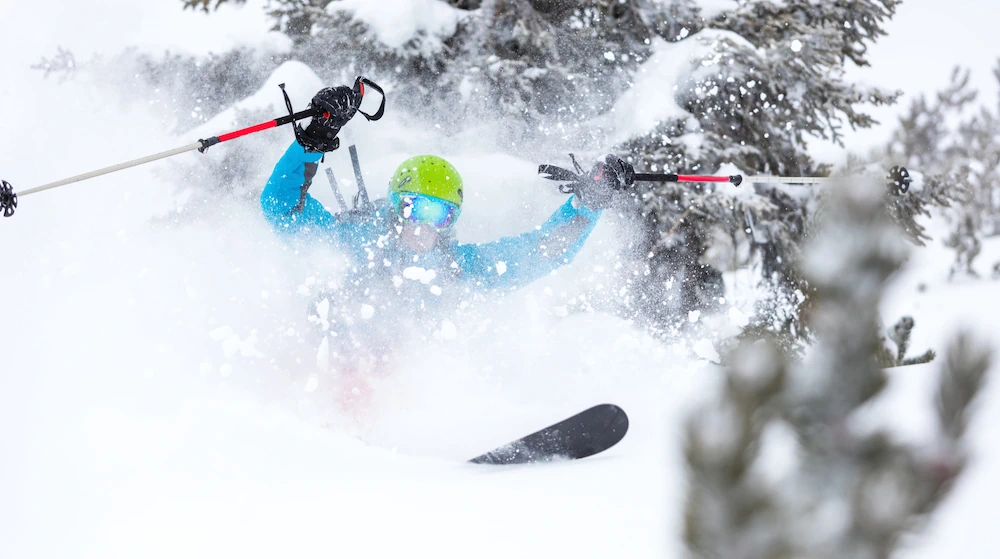
When you ski through the trees, you leave the big open boulevards behind and dive into glades, old-growth forest, and narrow pockets of trees. It's both playful and exciting, and on days with poor visibility, the forest can even offer the best snow and the best sightlines on the mountain.
First, we'll look at what makes tree skiing so enjoyable, and then dive into the best ski resorts in the world for this style of skiing.
What Makes Tree Skiing So Fun?
Not every forest is suitable for skiing, and not every resort can offer great tree skiing. If the trees are too dense, it's hard to move at all; if the forest is too wild, full of deadfall, rocks or other hazards, it can be nearly impossible to ski.So if you're searching for great tree skiing, these are the qualities you want:
- Consistent pitch - Steep enough to keep you moving, but not so steep that every mistake becomes punishing. Think good red run or comfortable black run.
- Tree spacing - There must be enough room between the trees; it can't be overly dense or overgrown.
- Reliable snowfall - You want soft snow that cushions a fall but is still light enough for quick turns. Deep, dry powder is ideal.
- Multiple aspects and elevations - So you can find the right mix of snow quality and visibility as the weather changes.
- Smart lift layout - Runs that take you directly back to a lift, instead of forcing you to pole along flat tracks for half an hour.
Is Tree Skiing Difficult?
Tree skiing is definitely not for beginners - it demands a skilled skier and adds an extra layer of complexity.Important skills include:
- Quick reactions - The terrain changes constantly, with small dips, rolls, tree wells, hidden stumps and rocks.
- Precise speed control - In the forest, there's less room for long, sweeping turns, so you rely on quick, sharp turns and fast speed checks.
- Terrain reading - You must choose your line, avoid tight clusters of trees or fallen logs, spot little clearings or natural halfpipes - all in fractions of a second.
Because of this, tree skiing is best suited to experienced skiers, especially considering the risk of injury. Strong intermediates who feel confident on red runs and easier black runs can start in mellow, wide glades and gradually move into steeper, tighter trees as their skills improve.
Safety Among the Trees
Tree skiing can be magical, but it also demands respect. These are the key safety factors to keep in mind:- Never ski alone in deep snow - Tree wells (deep pockets of loose snow around tree bases) are a serious hazard. Stay close enough to see one another and stop if your partner disappears from view.
- Controlled speed - You do not want to discover a ravine, a fallen log, or a sudden drop while flying along at 50 km/h.
- Wear a helmet - ideally with a back protector as well.
- Follow local guidance - Many resorts have marked glades that are controlled and patrolled. Start there before venturing into wilder terrain.
- Avalanche knowledge still matters - The forest can give a false sense of security. New snow on steeper forested slopes can still slide, especially above clearings and gullies.
Where to Find Great Tree Skiing - 8 Top Resorts Worldwide
With all of the above in mind, where should you go to experience world-class tree skiing? Here are eight of the best destinations in the world.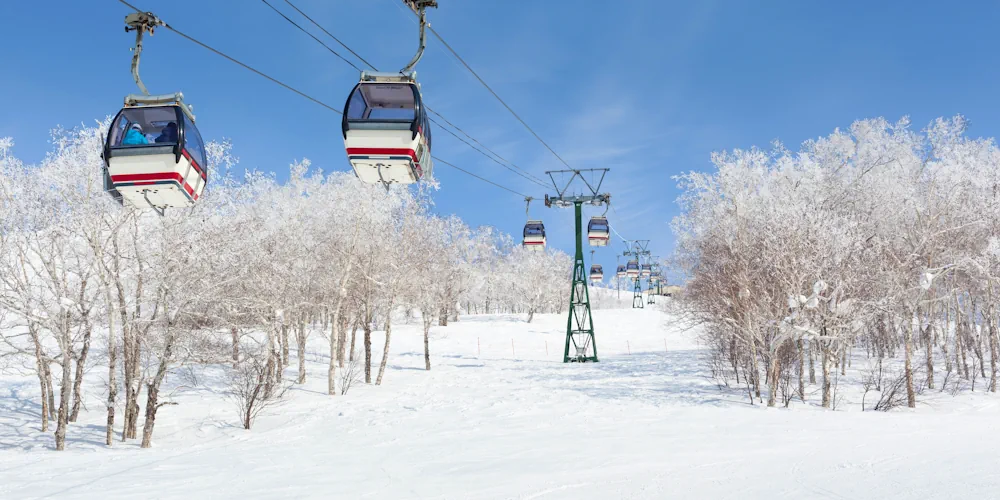
1. Niseko United, Japan
Niseko, on Japan's northern island Hokkaido, is a poster child for deep, light powder. Cold winds sweep across the Sea of Japan, pick up moisture, and drop it as snow on Niseko's volcanic slopes. The result: some of the most reliable powder conditions on the planet, with snowfall after snowfall continuously refreshing the slopes.Tree skiing here is legendary because the forests aren't extremely steep, are filled with small, widely spaced trees, and are blanketed with snow that feels almost weightless.
What the forest terrain is like
Niseko United links four areas (Grand Hirafu, Hanazono, Niseko Village and Annupuri), each with its own style of terrain:- Hanazono offers some of the friendliest glades, with playful lines and small gullies.
- Hirafu's sidecountry has longer, steeper tree runs that drop into bowls and natural halfpipes.
- Annupuri is calmer and less crowded - perfect when you want space to explore and ideal for those new to tree skiing.
Much of the best tree skiing is accessed via "gates" leading into sidecountry - partly controlled but not fully patrolled - so avalanche gear and experience are strongly recommended.
Off-snow vibe
Between runs you refuel with ramen, katsu curry and onigiri, then finish the day in an onsen, sinking into natural hot springs as snow falls onto the surrounding stones. It's a completely different rhythm from European or North American resorts - and it pairs beautifully with the dreamy, floating feel of Niseko's tree skiing.2. Revelstoke Mountain Resort, Canada
Revelstoke, in British Columbia, is where "tree skiing" and "serious vertical" meet. The resort has one of the largest vertical drops in North America, and much of it is covered in steep, beautifully spaced forests.Powerful snowstorms roll in from the Pacific and drop huge amounts of snow, and the forests soak it up, turning into long, challenging playgrounds for tree-skiing enthusiasts.
What the forest terrain is like
Revelstoke's forests are no joke:- Long, steep glades directly beneath lifts like The Stoke Chair
- Deep gullies and natural drainages forming mini-halfpipes with tree-lined walls
- Long runs where your legs burn from top to bottom
For those wanting to take tree skiing to the next level, the area is also famous for heli-skiing and cat-skiing, with endless untracked tree runs stretching far beyond resort boundaries.
Off-snow vibe
The town of Revelstoke still feels like a real mountain community rather than a purpose-built resort. Small breweries, low-key restaurants and a strong freeride culture mean you're surrounded by people who live for deep snow and big lines.3. The Arlberg Region (St. Anton & Stuben), Austria
The Arlberg - home to St. Anton, St. Christoph, Stuben and Lech/Zürs - is famous for deep snow and steep freeride terrain. But its tree skiing is exceptional too, especially on the lower flanks of St. Anton and Stuben.Few places in the Alps combine such reliable snowfall with so much steep, challenging forest terrain. When heavy snow hits (and it happens often), the tree zones become safe havens - sheltered from wind, full of soft snow, and often offering far better visibility than the open slopes above.
What the forest terrain is like
For experienced skiers, the Arlberg delivers some of the best advanced tree terrain in Europe:- Stuben stands out with its north-facing, lightly skied forests holding cold, dry snow well after storms.
- Kapall and Gampen above St. Anton have fun natural hits and open glades - perfect for advanced skiers dipping in and out of the woods.
- In heavy snow, lines from Valluga's lower sections offer deep, sheltered tree runs far from the crowds.
The terrain is more technical than many places - tighter trees, steeper slopes, bigger natural features - so it's best for seasoned tree skiers or those with a guide.
Off-snow vibe
St. Anton is famous for its après scene, while Stuben - just 10 minutes away - is quieter and more traditional. Together they create the perfect balance: party when you want, retreat when you don't, and enjoy serious skiing all the time.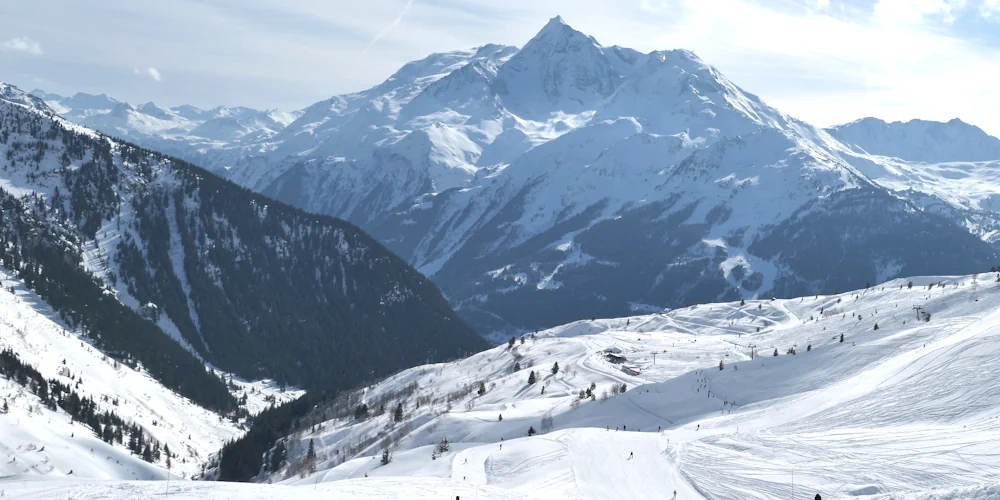
©
La Rosière
4. La Thuile & La Rosière (Espace San Bernardo), Italy / France
Straddling the border between Italy's Aosta Valley and France's Tarentaise sits a quieter, underrated ski area with surprisingly good tree skiing. La Thuile (Italy) and La Rosière (France) share the Espace San Bernardo domain, which stretches from high alpine terrain down into larch and spruce forests.Compared with the bigger Alpine names, it's more relaxed and less crowded - which often makes the tree zones feel like your own private world.
What the forest terrain is like
On the Italian side (La Thuile):- Long, sheltered pistes winding through the forest, with plenty of opportunities to dip into gentle tree zones
- Relatively open larch forests lower on the mountain, giving intermediates space to experiment
On the French side (La Rosière):
- More family-friendly pistes but still pockets of trees and a few wilder sections
- The ability to pick lines with good visibility when wind and snow hammer the high, exposed terrain
Because both ski areas are connected, you can chase the best conditions - and switch country (and cuisine) whenever you like.
Off-snow vibe
La Thuile has a relaxed, authentically Italian village feel: great coffee, real pizza, and a slower pace. La Rosière is more traditional, with cosy chalet-style bars and restaurants. Crossing the border on skis, then diving back into the trees as weather rolls in, is a uniquely satisfying way to spend a snowy day.5. Aspen Snowmass (Aspen Highlands & Snowmass), USA
Colorado may be best known for its groomers and alpine bowls, but around Aspen you'll find some of the most iconic aspen-tree skiing anywhere. The aspens grow tall and straight, with pale trunks and widely spaced branches, creating natural slalom lines that are as photogenic as they are fun.The region typically gets consistent, dry snow and many bluebird days, giving you soft snow in the trees and sunlight filtering between branches.
What the forest terrain is like
Each of Aspen's mountains has its own character:- Aspen Highlands offers steep glades dropping off lift lines and pockets of trees around the famed Highlands Bowl (if you're willing to hike).
- Snowmass has huge variety - from playful lower-mountain groves for confident intermediates to steeper, more technical areas like Burnt Mountain Glades.
Aspen's tree skiing is often less claustrophobic than conifer forests - the aspens are well spaced, sightlines are long, and "hero snow" days are common.
Off-snow vibe
The town of Aspen is as polished as ski resorts get - galleries, high-end restaurants, and lively après bars. If you like the idea of spending the day bouncing through serene white forests and the evening sipping cocktails or listening to live music, Aspen delivers the perfect mix.6. Myoko Kogen, Japan
Back to Japan - this time Honshu. Myoko Kogen is a cluster of linked ski areas in Niigata Prefecture, sitting in the firing line of huge snowfalls from the Sea of Japan. It's less internationally famous than Niseko, meaning fewer crowds and more untouched lines - especially in the trees.The snow is deep and plentiful, and the slopes are lined with beautiful beech and cedar forests holding powder stashes long after the last storm.
What the forest terrain is like
Different Myoko areas (Akakura Onsen, Akakura Kanko, Suginohara, Ikenotaira, etc.) offer slightly different flavours, but the general feel is:- Medium-steep glades with enough pitch to keep you moving
- Short hikes, big rewards - a little traversing or bootpacking opens up long, lightly skied tree lines
- Natural features such as rolls, pillows, creek beds and small drops that keep things interesting without requiring extreme skill
Policies vary, so hiring a local guide for a day is well worth it.
Off-snow vibe
Myoko's villages feel more old-school and Japanese than many larger, more international resorts. Tiny izakaya, family-run lodges, and steaming outdoor onsens create the perfect atmosphere after a day weaving between snow-covered trunks.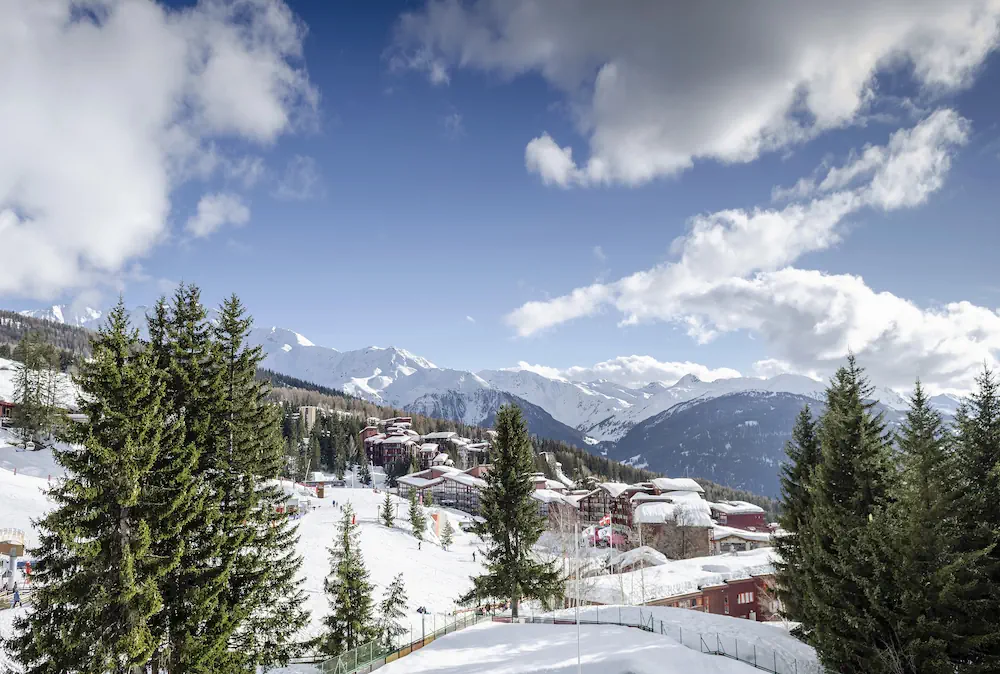
Les Arcs
7. Les Arcs, France
Les Arcs, part of the vast Paradiski area, offers some of the best lift-accessible tree skiing in France. Like La Thuile and La Rosière, it benefits from both high alpine terrain and deep, sheltered forests - but on a bigger scale. The different "Arc" villages sit at different elevations, letting you choose your ideal mix of snow quality, visibility and forest density.The larch forests around Arc 1600 and Arc 1800 are especially beloved by locals for holding soft, untouched snow long after storms.
What the forest terrain is like
Les Arcs offers a wide range of options:- Between Arc 1600 and 1800, you'll find long, flowing tree lines with forgiving spacing and fast-but-manageable pitch - perfect for storm days.
- Peisey-Vallandry offers gorgeous larch forests with consistent gradients and natural terrain waves - arguably some of the most enjoyable tree skiing in the French Alps.
- Villaroger, a quieter corner, has long, steep, north-facing tree runs that keep powder cold. More advanced, and best with local knowledge.
Les Arcs combines variety, length and snow reliability in a way few French resorts manage.
Off-snow vibe
Each Arc village has its own feel. Arc 1950 and 2000 are modern and convenient; Arc 1800 is lively with bars and restaurants; Peisey-Vallandry is quieter and more traditional. No matter where you stay, you're just a couple of lifts from excellent tree skiing.8. Åre, Sweden
We finish with Sweden's top entry. Åre is Scandinavia's most complete ski resort and one of the few European destinations where tree skiing is central to the experience. Because the treeline sits relatively low in Sweden, much of Åre's best terrain is in birch and pine forests that stay sheltered when snowstorms sweep over the mountain.Frequent snowfalls, consistent cold and long seasons - from November to early May - mean the trees often hold soft snow, especially during stormy or flat-light days when the upper mountain is closed or unpleasant.
What the forest terrain is like
Åre's lower and mid-mountain zones are packed with inviting glades and natural features:- Around Rödkullen and Bräcke, playful, widely spaced trees are perfect for intermediates trying off-piste for the first time.
- Duved, a quieter part of the area, has some of Scandinavia's most reliable tree skiing - long, sheltered runs and pockets of untouched snow days after a storm.
- In Tegefjäll, gentle terrain and well-spaced trees offer an excellent introduction to tree skiing.
Because of the cold climate, the snow stays chalky and light in the woods, and visibility is almost always better than higher up.

Off-snow vibe
Åre village is lively without being overwhelming. It blends Scandinavian design, good restaurants, craft breweries and a friendly outdoor culture. You can ski all day, warm up with a cinnamon bun in a café, and enjoy local food overlooking the frozen lake. The atmosphere matches the skiing - cosy, energetic and deeply wintery.How to Get Better at Tree Skiing
If this has inspired you to venture into the trees, here are some tips to make your first real forest turns more enjoyable:1. Start in easy glades
Look for marked tree runs or very widely spaced forests next to a piste. You can always hop back out if it gets too difficult.2. Shorten your turns
Practise fast, controlled turns with a solid pole plant on groomers. You'll need that rhythm in the forest, where long arcs aren't possible.3. Look ahead, not at the trees
Your skis follow your eyes. Focus on the gaps between the trees - your body will naturally move toward them.4. Use appropriate gear
Slightly wider all-mountain or freeride skis help you stay on top of softer snow and pivot more easily. In deeper snow or steeper terrain, bring avalanche safety gear and ski with people who know the area.5. Respect local rules and the environment
Stay out of closed areas, watch out for wildlife and young trees, and pack out everything you bring. Some tree zones are strictly off-limits - respect those closures.Final Words
Tree skiing takes something already fantastic - gliding over snow - and adds the feeling of travelling through a living landscape. Whether you're floating through Hokkaido powder, battling long Canadian tree faces, or weaving between pale aspens under Colorado's blue sky, those moments between the trunks linger in your memory far longer than a perfectly groomed piste.Pick one of the resorts above, bring friends you trust (ideally with some tree-skiing experience), and start with mellow glades. Once you've experienced your first dreamy storm-day run in the forest, you'll understand why so many skiers quietly prefer the trees to the open slopes.