
When Turns Matter: Ski Events with a Charitable Focus
Snow has a remarkable way of turning strangers into companions. On a chairlift, you exchange stories with someone you have never met; in the lift line, you laugh at the same small moments of chaos; and up on the slopes, it is easy to believe that what you are doing can send ripples far beyond the mountain's boundaries.And that is precisely the core of what we mean when we talk about ski events with a charitable focus - the idea that a day filled with turns can also create real change. Around the world, skiers and snowboarders come together to raise money for medical research, youth programs, community support, climate initiatives, adaptive sports, and countless other causes. While some events are large festivals with corporate sponsors and well-known ambassadors, others are small, locally organized ski-a-thons, where the reward is a homemade cake and the satisfaction of having helped someone else.
Regardless of the size of the event, the formula is beautifully simple - you do what you love, you invite others to join in, and you turn the energy of an ordinary winter day into something that can help others in a tangible way.
What charity ski events usually look like
Most charity events on snow follow a few familiar formats:Vertical challenges (also known as ski-a-thons) - participants raise money based on the number of runs, lift rides, or vertical meters skied in a day. It is a clear and measurable goal, and also perfect for anyone who enjoys tracking statistics.
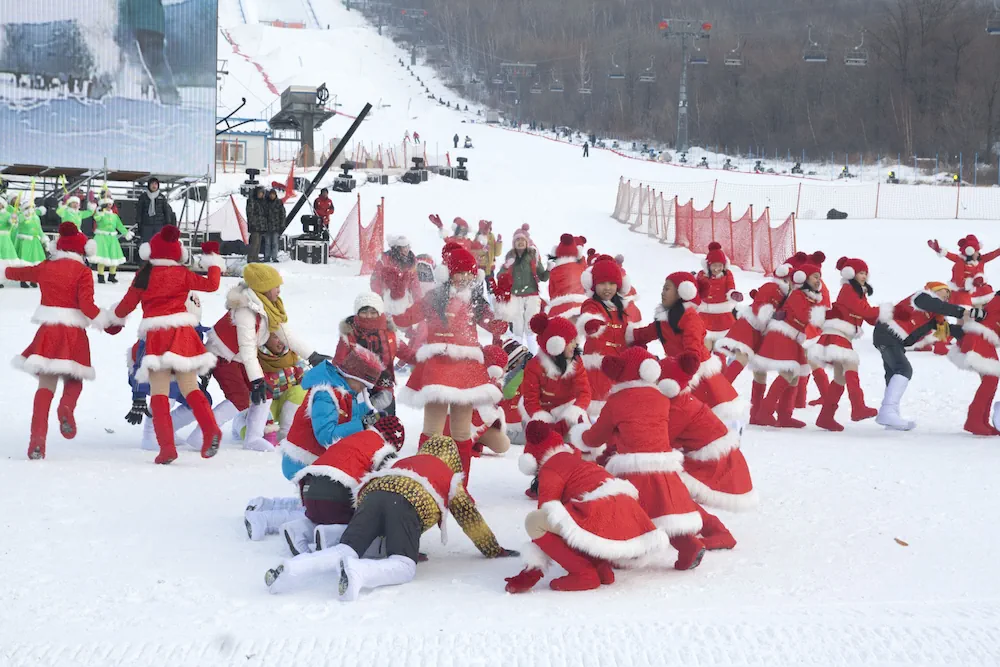
Costume and theme days - people show up in capes, retro one-piece suits, or full animal costumes to attract attention and draw in donations. These events thrive on photos and social media sharing, which can dramatically increase the total amount raised.
Competition-focused events - from friendly slalom races to timed downhill runs, competitions give participants a concrete goal and spectators something to cheer for.
Summit tours and endurance outings - in some regions, charity events take participants off-piste - guided and with a strong focus on safety, of course - and link fundraising to environmental stewardship on the mountain or education focused on nature and outdoor life.
Festival weekends - for example, live music, auctions, brand demonstrations, and family activities where the proceeds go to a selected nonprofit organization.
Often, the fundraising is combined with elements that blend skiing with community - group warm-ups, "first lift" ceremonies, hot chocolate stations, medals for everyone who finishes, or a closing party for all participants.
Europe - heritage, spectacle, and social solidarity
Across Europe, charity events often merge with long-standing alpine traditions. In the Alps, the Pyrenees, the Dolomites, and Scandinavia, winter sports carry a cultural heritage - so it is natural that fundraising is woven into public life.At many European ski resorts, you see torchlight descents and fundraising events with evening and night skiing, where participants wear headlamps and ski in coordinated lines. These events are as much about symbolism for winter sports - light in the darkness, togetherness in the cold, collective action in a wintry environment that can otherwise feel lonely and harsh.
There are also charity competitions that combine performance with celebration - sometimes with a gala dinner or an auction as the finale. The auction format is particularly effective at ski resorts, since local businesses can donate high-value experiences, such as a guided day with a local expert, a private dinner in a luxury chalet, a week-long equipment rental package, or a series of lessons.
Another distinct European feature is cross-border participation. The Alps, in particular, create natural "international meeting places," and charity events sometimes attract skiers from several countries, turning fundraising into a shared language. The causes vary widely - healthcare and humanitarian aid are common - but environmental initiatives are becoming increasingly prevalent as communities face changing snow patterns and shorter seasons.
North America - broad participation, big stories
In the United States and Canada, these events are a natural part of winter. They range from entire resort-wide fundraising days to grassroots initiatives run by ski clubs, schools, and local nonprofit organizations.A common setup is "ski for research" events, which often support children's hospitals, cancer research, or foundations for rare diseases. Participants set ambitious goals - such as skiing from the first lift to the last - because endurance strengthens the story. Here, storytelling plays an important role as well: when donors can imagine someone battling icy winds on a ridge at three in the afternoon to squeeze in "one more run," they are more inclined to contribute.
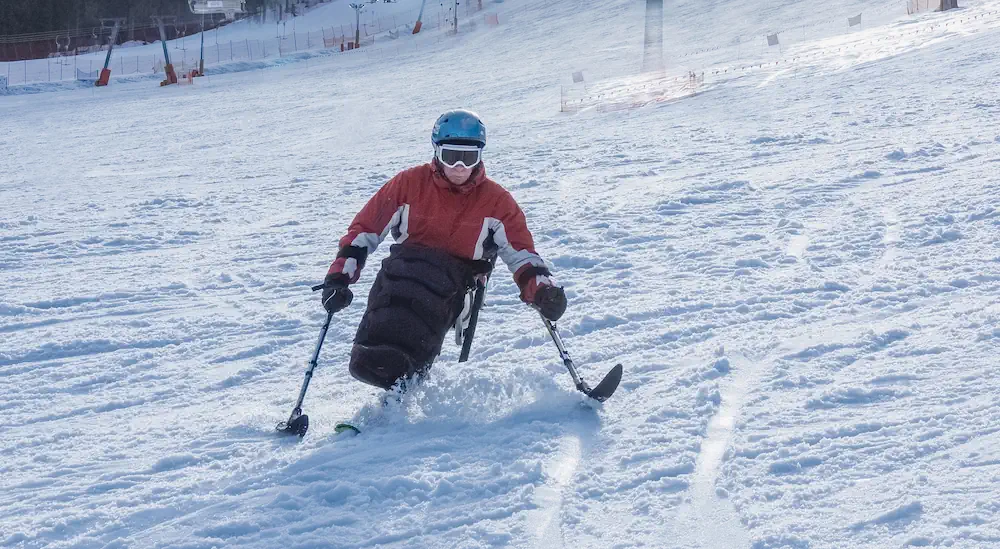
Equally prominent are events that benefit organizations for adaptive sports, which provide equipment and instruction for skiers with disabilities. These fundraisers are often especially powerful because participants can directly see what their money goes toward - sit-skis being adjusted, instructors working one-on-one, a participant taking their first independent turns. The slopes become not just a place for sport, but also a symbol of accessibility.
Then there is community support and local youth initiatives - the smaller events that can nonetheless have major local impact. In mountain towns where seasonal workers and families may struggle with housing costs, a charity ski day can support food banks, childcare programs, or emergency funds. These are events where the beneficiaries feel so close they might as well be your neighbors - which, in many cases, they are.
Asia and Oceania - growing scenes and strong communities
In Japan, South Korea, and China, ski culture has grown rapidly stronger over recent decades, and charity events have followed - often with a focus on community building and youth programs. The events may be smaller than the largest North American fundraisers; they are often very local but well organized, with schools, clubs, and ski resorts creating a supportive environment for first-time participants.In Australia and New Zealand - where ski seasons are shorter and snow conditions more unpredictable - charity events of this kind are often shaped by flexibility. They are frequently combined with broader winter festivals, and the fundraising can support both regional causes and international campaigns. Because ski communities are tightly knit, a single event can engage a surprisingly large share of local skiers, making the social impact immediate.
The most common causes - and why skiing fits so well
Charity ski events support almost every imaginable cause, but some are particularly well suited to life in the mountains:Health and medical research - the endurance aspect of skiing creates a natural metaphor for perseverance and struggle. Many people ski in memory of someone they have lost or in support of someone who is still fighting.
Adaptive sports and inclusion - skiing can change lives when it is made accessible. Fundraisers often support sit-skis, lessons, transportation, and the training of instructors.
Child and youth development - skiing is an expensive sport, and many families struggle to afford it for their children. Charity events help finance lift passes, equipment libraries, training, and mentorship.
Mountain safety and rescue - in some regions, events raise money for ski patrols, avalanche education, and mountain rescue - that is, causes close to the hearts of everyone who regularly spends time in alpine environments.
Environmental and climate initiatives - ski resorts and skiers increasingly recognize that winter sports depend on stable winters. Fundraising can support reforestation, watershed protection, or climate action.
How these events raise more money than you might think
The most successful events are rarely those with the fastest skiers - but those with the strongest sense of community.Teams create momentum - people raise more money when they are part of a team: a workplace group, a ski club, a family, or a school. Friendly rivalry helps.
Matched donations change the equation - a sponsor who matches gifts during a certain period can quickly double the results, especially when combined with effective use of social media.
Auctions and raffles increase volume - experience-based prizes - typically private lessons, guided tours, or spa packages - often generate more revenue than physical equipment.
Micro-donations increase total sums - a simple campaign like "10 euro for 10 runs" works because the threshold is low. Many small donations can rival a few large ones.
Stories drive generosity - participants who share a personal reason - no matter how brief - often outperform more generic fundraising pages.
If you want to take part (or start your own)
You do not need a major partnership with a ski resort to make a difference. A charity event can begin with a small group and a clear plan:- Choose a cause that feels local or personal. Donors respond better when the connection feels genuine.
- Choose a simple format. A slope challenge, a costume day, or a friendly race works well.
- Set a visible goal. A fundraising target and a participation goal keep motivation high.
- Make the event social. Hot drinks, a meeting point, a group photo, and a relaxed après-ski make a big difference.
- Explain exactly what the money does. "Funds an adaptive lesson" is stronger than "supports operations."
- Celebrate those who take part, not performance itself. The best events welcome both beginners and experts.
The deeper reason these events matter
Skiing is often seen as an individual sport - just you, gravity, and the line you choose. Charity events flip that perspective. They remind us that winter culture is built on networks no one can do without - instructors who teach, patrols that protect, lift operators who keep everything moving, local businesses that thrive on snowy days, and communities that manage the economy that allows a ski resort to survive.When skiers gather for a good cause, they do more than raise money. They practice a form of alpine community that is generous by nature. They show that outdoor life can be connected to the world beyond the ski slopes. And at the end of a charity ski day - with burning legs, wind-chapped cheeks, and pockets full of crumpled receipts - a particular kind of satisfaction sets in. You did not just ski. You helped.