
Ski Resorts That Have Hosted the Olympic Games
In February it's time for the Winter Olympics again, and few sporting events offer such beautiful settings as the Olympic Winter Games. They can be seen as a tribute not only to athletic achievement, but also to the beautiful snow-clad ski resorts and surroundings that host the competitions.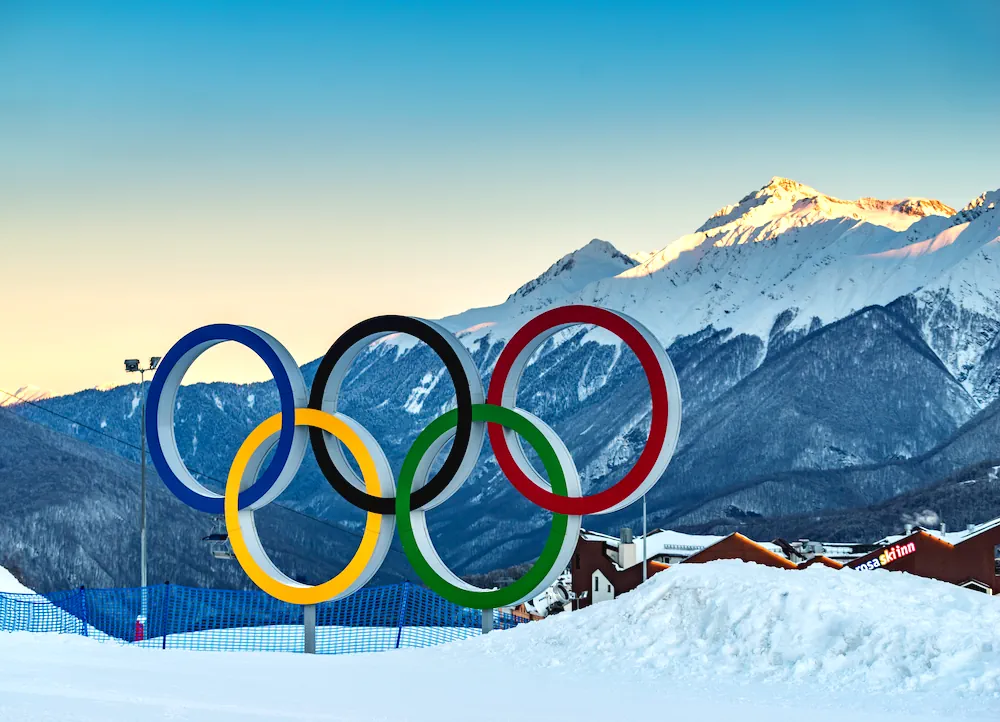
©
Unlike the Summer Games, the first Winter Olympics were not held until 1924, when the French town of Chamonix served as host. Here, we'll take a look at the ski resorts that have hosted the Games over the years. Some were already very well known, while others gained elevated status thanks to hosting the Olympics.
Upcoming chapter: Milano-Cortina 2026
The upcoming Winter Olympics in 2026, officially called Milano-Cortina 2026, mark an exciting return to the Italian Alps for the third time in Olympic history. The Games are shared between Milan, the country's fashion and financial capital, and Cortina d'Ampezzo (or simply Cortina), one of Europe's most iconic ski resorts. Several other Italian resorts, including Bormio, Livigno and Val di Fiemme, will also host various alpine, freestyle and snowboard events.It's not the first time Cortina hosts the Winter Games - they also served as host in 1956, exactly 70 years earlier (when the 2026 Games are held). One reason for the choice this time is that it reflects the International Olympic Committee's renewed focus on sustainability: using existing facilities instead of building new ones. At a time when large infrastructure projects are increasingly questioned, this edition showcases an already established ski resort.
Where the competitions will take place
As mentioned, it's not only Cortina hosting events; these are all the ski resorts involved in this Winter Olympics.- Bormio - a classic resort in northern Lombardy with extensive experience hosting Alpine World Cup races. The men's alpine events will take place here on the legendary Stelvio piste - one of the world's most challenging downhills.
- Cortina d'Ampezzo - surrounded by the UNESCO-listed Dolomites, hosts the women's alpine events on the classic Tofana slopes.
- Livigno - located high in the Alps near the Swiss border, becomes the stage for snowboard and freestyle events.
- Val di Fiemme and Predazzo - the resorts in the province of Trentino will handle cross-country skiing and ski jumping.
Because the Games are spread across much of northern Italy, the 2026 Olympics will showcase the full breadth of Italy's alpine nature and culture - from elegant villages and steep Dolomite walls to the energy of freestyle culture in Livigno. In other words, it's a showcase for what the Italian Alps can offer - la dolce vita on snow.
Beyond the ski resorts we've just covered, several events will also be decided in Milan. In addition to the opening ceremony, all ice-skating disciplines - including ice hockey - will take place there. The closing ceremony, however, will rather surprisingly be held in Verona.
A look back at previous Winter Olympics
Excitement ahead of the upcoming Games is, of course, high, but the main focus of this article is a look back at previous Winter Olympics. Here we review the most important and best-known Winter Games since the beginning.Cortina d'Ampezzo - the classic return (1956)
When Cortina first hosted the Winter Olympics in 1956, television was still something new, and that year's Games became the first Winter Olympics broadcast live on European TV, giving millions of viewers their first glimpse of the spectacular Dolomites.The alpine events created legends - above all Austria's Toni Sailer, who won three gold medals in downhill, slalom and giant slalom - an unprecedented feat at the time. The Tofana and Monte Faloria slopes became famous through these Games, and Cortina earned the nickname "Queen of the Dolomites."
That the resort now gets to host again feels symbolic, a bridge between past and future. Today, Cortina is a luxury ski resort with international elegance, but its Olympic heritage lives on in its timber-clad streets, fashionable cafés and long, sun-drenched pistes where Olympic history was written 70 years ago - and Cortina is now ready to write new history.
St. Moritz, Switzerland - the cradle of winter sports (1928 and 1948)
We chose to begin our list with Cortina because the Games are being held there this time, but normally a list of Olympic ski resorts starts with St. Moritz. This Swiss resort has hosted the Winter Olympics twice - first in 1928 and again in 1948 - and St. Moritz is widely regarded as the birthplace of modern winter sports tourism.Even before the Olympics, St. Moritz had become a winter paradise for Europe's elite, where British aristocrats in the late 19th century introduced skiing and tobogganing to the Alps. The 1928 Games were still small-scale, but when St. Moritz returned in 1948 - the first Winter Olympics after World War II - the town became a symbol of the feelings of peace, hope and reconstruction that were blossoming around the world at the time.
The frozen lake, sunny slopes and elegant hotels created a unique alpine atmosphere. The French skier Henri Oreiller and the Norwegian Birger Ruud were the stars of the Games, while the natural bob and skeleton track, the Cresta Run, and the world's only remaining natural-ice track put the Engadin valley on the map.
St. Moritz still carries its Olympic aura today, continuing to host World Cup events and exclusive winter happenings - a legacy stemming from those early Olympic Games nearly a century ago.
Chamonix, France - where it all began (1924)
Before the Olympic flame burned in Cortina or St. Moritz, the very first Winter Games were held in Chamonix, at the foot of Mont Blanc, in 1924. The event was then called the "International Winter Sports Week" under the auspices of the IOC, but was later recognized as the first official Winter Olympics.Alpine skiing was not yet on the program; the competitions consisted mainly of cross-country skiing, ski jumping and speed skating. Even so, the Games cemented Chamonix's reputation as a world capital of mountain sports in winter. Fewer than 300 athletes from 16 countries took part, but the Games marked the beginning of the modern era of winter sports.
For today's travelers and skiers, Chamonix remains a mythical place - home to the Aiguille du Midi, the Vallée Blanche and Europe's highest peaks - and it was, after all, here that the "Olympic spirit" first met winter, snow and ice.
Innsbruck, Austria - the heart of Tyrol (1964 and 1976)
Few alpine cities are as closely associated with the Olympics as Innsbruck, Austria, which has hosted the Winter Games twice - in 1964 and 1976. In the heart of Tyrol, Innsbruck offers a rare combination: not only a historic city, but one where ski slopes practically begin at the city's edge.At the 1964 Games, the alpine events were held at the Axamer Lizum resort and on Mount Patscherkofel, while the Nordic disciplines and ski jumping took place in the surrounding valleys. These Games were marked by several technical innovations; among other things, it was the first time that run times were measured to hundredths of a second - something that changed the sport forever. That same year, the Austrian army had to transport snow and ice from higher elevations down to the slopes and tracks due to unexpectedly mild weather - in retrospect, an early reminder of how changes in climate and weather conditions affect winter sports.
When Innsbruck hosted again in 1976 (after Denver withdrew), the city's status as one of the world's leading winter destinations was reinforced. To this day, its slopes, ski jumps and arenas bear clear traces of its Olympic heritage.
Lake Placid, USA - twice in the spotlight (1932 and 1980)
Across the Atlantic, Lake Placid in New York State shares the honor of having hosted the Winter Olympics twice, like St. Moritz and Innsbruck - first in 1932 and again in 1980.The 1932 Games helped introduce the American winter to the rest of the world, but it is the 1980 Games that are etched in history and memory thanks to the legendary "Miracle on Ice", when the U.S. hockey team, made up mostly of amateurs, defeated the mighty Soviet Union. At the time, no Soviet players competed outside the country, allowing them to field their very best - and yet they lost, miraculously.
For skiing, Whiteface Mountain took center stage. With one of the largest vertical drops in North America and an icy, demanding character, the mountain proved a perfect Olympic arena.
The Olympic legacy still lives on here. Visitors can still ski the Olympic trails, visit the bobsleigh track that remains from 1932, or stand atop the iconic ski-jump tower that looms over the lake.
Lillehammer, Norway - Nordic mastery in perfection (1994)
The 1994 Winter Olympics in Lillehammer, Norway, are often described as the most well-organized and environmentally conscious in history. They also introduced the world to Kvitfjell, a newly built ski area at the time, created specifically for the alpine events.Kvitfjell was designed for downhill and super-G, combining modern engineering with natural beauty, and opened many eyes around the world to Norway's magnificent nature and landscapes. The slopes here are still used on the World Cup circuit, showing how Olympic venues can enjoy long lives after the Games.
Lillehammer also became an example of how Olympic venues can be integrated into local culture. Most facilities, including the ski jumps and cross-country arenas, are still in use today.
Albertville, France - a network of alpine venues (1992)
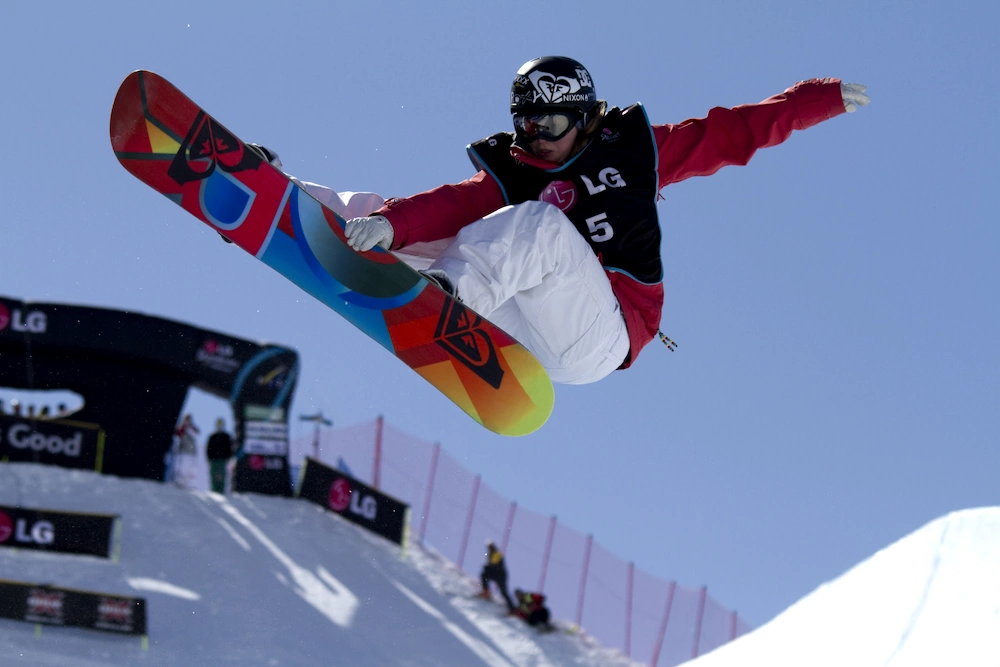
The French Winter Games in 1992, based in Albertville, were spread across several of Savoie's premier ski resorts - a model that also recalls the upcoming Milano-Cortina 2026.In Méribel, the women's alpine events were held on the Roc de Fer slope, built specifically for the Olympics. The technically demanding piste brought international attention to the resort, and it is still used for top-level alpine competitions.
Albertville's "decentralized" approach, where multiple resorts shared hosting duties, proved successful and showed how sport and tourism can work together in the Alps' already established ski areas.
©
Nagano, Japan - a bridge to Asia (1998)
When Nagano hosted the 1998 Winter Olympics, it was only the third time the Games had been held in Asia. The alpine events took place at Happo One in the Hakuba Valley, which later became an international magnet for skiers thanks to its steep terrain and abundant snowfall.The Nagano Games also introduced snowboarding as an Olympic sport, a milestone that changed the culture of winter sports and opened the door to a new generation of participants, as snowboarding carried a younger and freer spirit. Hakuba's journey from an unknown resort to a global name shows how the Olympics can change the destiny of a place and a mountain.
Vancouver, Canada - modern grandeur (2010)
Few ski resorts have achieved the same international renown as Whistler, the star of the Vancouver 2010 Winter Olympics. Located in British Columbia's Coast Mountains, Whistler-Blackcomb had long been North America's premier ski resort, but was perhaps less well known to the general public outside North America. The Games showcased Whistler's vast terrain and stunning scenery to a global audience.During the Olympics, most alpine, Nordic and sliding events were held in Whistler, while ice and indoor sports took place in Vancouver. Since then, the resort has grown into a year-round destination and become an example of how an Olympic venue can thrive after the Games, where elite sport and tourism are kept in balance.
The legacy of the mountains
From the European Alps to the American Rockies, from Japan's Hakuba to Canada's Whistler - the connection between the Olympics and ski resorts runs deep. Hosting the Games can transform a resort at its core. But it also brings challenges, such as high maintenance costs, unwanted mass tourism and environmental impact.More and more organizers are learning from history. The Milano-Cortina 2026 model, where existing facilities are used across a broader area, points the way toward more sustainable Games. It's a return to the idea that the Olympics belong in real ski resorts with existing infrastructure, not only in temporary venues built just for the event.
For skiers, this means many Olympic runs are still open to everyone. You can still ski Tofana in Cortina, Patscherkofel in Innsbruck or Stelvio in Bormio - the same slopes where gold medals were once won. Few sports allow fans to so literally follow in the tracks of history.
All previous Winter Olympics in chronological order
Finally, below you'll find all previous Winter Olympics in chronological order, including where they were held, the key venues/ski resorts that hosted events, and some important moments and facts about each Games.| Year | Host City | Country | Main Ski Resort(s) / Venue(s) | Key Skiing-Related Moments & Highlights |
|---|---|---|---|---|
| 1924 | Chamonix | France | Chamonix-Mont-Blanc | The first Winter Olympics ever; Nordic disciplines were dominated by Norway. Alpine skiing was not yet included. |
| 1928 | St. Moritz | Switzerland | St. Moritz | First Olympics in a true ski resort; known for elegance and sunshine. No alpine skiing yet. |
| 1932 | Lake Placid | USA | Whiteface Mountain | First Games in North America; low participation due to the Depression; cross-country on tough Adirondack terrain. |
| 1936 | Garmisch-Partenkirchen | Germany | Garmisch & Hausberg | Alpine skiing included for the first time; weather issues; Germany showcased its ski culture. |
| 1948 | St. Moritz | Switzerland | Corviglia & Muottas Muragl | Post-war "Games of Renewal." First Olympics after World War II. Alpine combined and downhill returned. |
| 1952 | Oslo | Norway | Holmenkollen & Norefjell | Nordic events dominated; Norefjell used for alpine. First Winter Olympics with a torch relay. |
| 1956 | Cortina d'Ampezzo | Italy | Tofana & Faloria | First Winter Olympics broadcast on television. Austria's Toni Sailer wins three golds. Cortina becomes the "Queen of the Dolomites." |
| 1960 | Squaw Valley (now Palisades Tahoe) | USA | Squaw Valley | First Olympics with computerized timing (IBM). No bobsleigh due to cost. Frenchman Jean Vuarney wins downhill gold. |
| 1964 | Innsbruck | Austria | Patscherkofel & Axamer Lizum | Army had to haul snow due to mild weather; first timing to hundredths; Egon Zimmermann wins the downhill. |
| 1968 | Grenoble | France | Chamrousse | Jean-Claude Killy wins three golds and becomes an icon. First color TV broadcast of the Winter Games. |
| 1972 | Sapporo | Japan | Teine & Mt. Eniwa | First Winter Olympics in Asia; Japan's Yukio Kasukawa wins Asia's first ski gold (Nordic combined). |
| 1976 | Innsbruck (took over from Denver) | Austria | Patscherkofel & Axamer Lizum | Denver withdrew due to costs; Austria stepped in. Franz Klammer's downhill becomes legendary. |
| 1980 | Lake Placid | USA | Whiteface Mountain | "Miracle on Ice" in hockey; Sweden's Ingemar Stenmark wins two golds (giant slalom, slalom). |
| 1984 | Sarajevo | Yugoslavia (Bosnia & Herzegovina today) | Jahorina & Bjelašnica | Strong organization; Finland's Marja-Liisa Hämäläinen dominates cross-country. |
| 1988 | Calgary | Canada | Nakiska (alpine), Canmore (Nordic) | First Games with professional participation in alpine skiing. Alberto Tomba wins double gold. |
| 1992 | Albertville | France | Méribel, Courchevel, Les Menuires | Events spread across Savoie; Roc de Fer in Méribel built for the women's races. |
| 1994 | Lillehammer | Norway | Kvitfjell & Hafjell | Praised as the best-organized Winter Games; Kjetil André Aamodt shines; environmental focus. |
| 1998 | Nagano | Japan | Hakuba (Happo One) | Snowboarding debuts; heavy snowfall causes delays; Hermann Maier's crash and comeback. |
| 2002 | Salt Lake City | USA | Deer Valley, Snowbasin, Park City | Bode Miller impresses; first Games after 9/11; strong American results. |
| 2006 | Turin | Italy | Sestriere, Pragelato, Cesana | First Italian Winter Olympics since 1956; Michaela Dorfmeister (AUT) wins two golds. |
| 2010 | Vancouver | Canada | Whistler-Blackcomb | Lindsey Vonn wins her first gold; fog and rain disrupt schedules; major Canadian success. |
| 2014 | Sochi | Russia | Rosa Khutor & Krasnaya Polyana | Record-cost Games; an entirely new resort built; Ted Ligety and Mikaela Shiffrin triumph. |
| 2018 | PyeongChang | South Korea | Yongpyong & Jeongseon | High winds cause delays; Norway tops the medal table; alpine events on the Taebaek Mountains. |
| 2022 | Beijing | China | Yanqing (alpine), Zhangjiakou (Nordic) | Artificial snow throughout; Mikaela Shiffrin's unexpected DNFs; first claim of climate-neutral Winter Games. |
| 2026 (upcoming) | Milano-Cortina d'Ampezzo | Italy | Cortina (Tofana), Bormio (Stelvio), Livigno, Val di Fiemme | Return to Italy; reused venues for sustainability; Bormio hosts the men's downhill, Cortina the women's; Livigno for freestyle/snowboard. |