
Latest posts:
8 Ski Resorts in the Alps Where You Can Avoid Long Lift Queues
8 Ski Resorts in the Alps Where You Can Avoid Long Lift Queues
Standing in a lift queue for 20 minutes only to spend five minutes skiing downhill is something of a nightmare for skiers, and hardly what you have in mind when booking a ski holiday in the Alps. Although lift systems have been extensively modernised and made more efficient over the past few decades, long lift queues remain a problem at many of the most popular ski resorts, and the situation naturally gets even worse during peak season.However, there are also ski resorts where you can get straight onto the next lift without having to wait for much of the day, and this does not necessarily mean choosing a small and relatively unknown resort. There are several fairly large ski areas in the Alps where the combination of high lift capacity, a limited number of visitors and a well-designed lift system means that you rarely have to spend much time in lift queues.
What Determines the Length of Ski Lift Queues?
The number of visitors at a ski resort is naturally an important factor, but it is far from the only one. A large ski resort with modern eight-seater chairlifts and gondolas can accommodate considerably more skiers than a smaller resort with older two- and four-seater chairlifts.Equally important is how the ski area is designed and laid out. If, for example, all skiers have to use the same gondola to get up the mountain in the morning, a bottleneck can easily develop, even if there is plenty of capacity higher up in the ski area. The same applies to lifts connecting different parts of a larger ski area.
Other factors that can affect lift queues include:
- The number of hotel beds and holiday apartments in relation to the size of the ski area.
- The distance from major cities and, consequently, the number of skiers visiting for the day.
- The proportion of modern, high-capacity lifts.
- The reliability of the lifts and the risk of technical problems.
- How susceptible the lift system is to strong winds and other challenging weather conditions.
There are no comprehensive and comparable public statistics on average waiting times at ski lifts across the Alps, so the ski resorts presented here should not be regarded as an exact ranking, but rather as eight good alternatives for those who prioritise short lift queues and plenty of space on the slopes.
1. Obergurgl-Hochgurgl, Austria
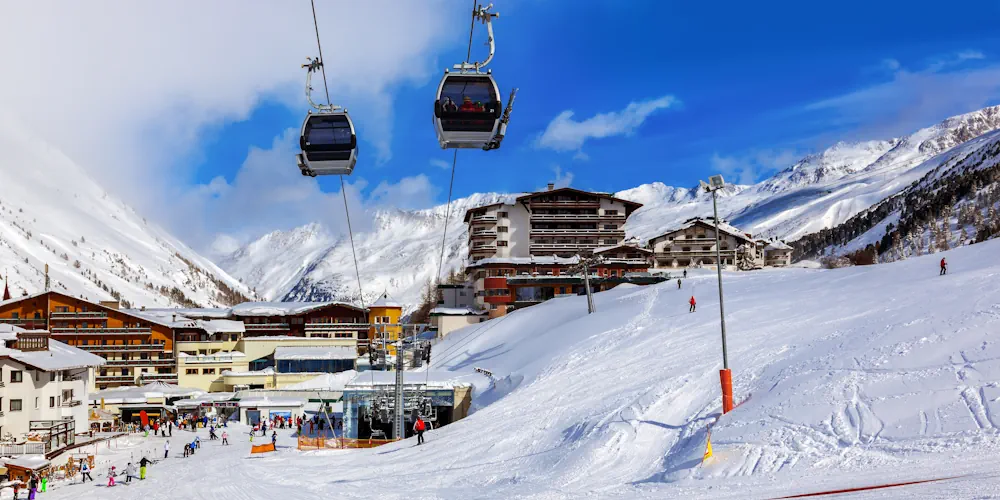
Obergurgl and Hochgurgl, which are jointly marketed under the name Gurgl, are located at the far end of the Ötztal Valley in the Austrian Tyrol. The ski area offers a total of around 112 kilometres of pistes and 25 lifts, and short waiting times are actually one of the resort's main selling points when it comes to attracting skiers.Unlike the much busier Sölden further down the same valley, Gurgl has a quieter atmosphere and a more upmarket selection of hotels. There are also several lifts that take skiers directly from the villages into the ski area, reducing the risk of morning queues.
The skiing takes place at altitudes of between 1,800 and just over 3,000 metres, making Gurgl a good option both early and late in the ski season. It should be said, however, that the main drawback is the price level, with accommodation in particular tending to be relatively expensive.
2. Bad Kleinkirchheim, Austria
In Carinthia in southern Austria lies Bad Kleinkirchheim, a ski resort that is well known among Austrians but has not received quite the same international attention as the resorts in Tyrol and Salzburg.Although this is not one of Austria's largest ski resorts, it offers 103 kilometres of pistes and 23 lifts. The ski area is dominated by red runs, making it particularly suitable for intermediate and more experienced skiers who appreciate long, well-groomed pistes.
The skiing is spread across several parts of the mountain, and there are multiple access points to the ski area from the valley. Bad Kleinkirchheim also frequently receives positive reviews from visitors regarding the amount of space on the slopes.
Bad Kleinkirchheim is also famous for its thermal baths, making it an excellent option for those who want to combine skiing during the day with some enjoyable relaxation in the evening.
©
3. Sainte-Foy Tarentaise, France
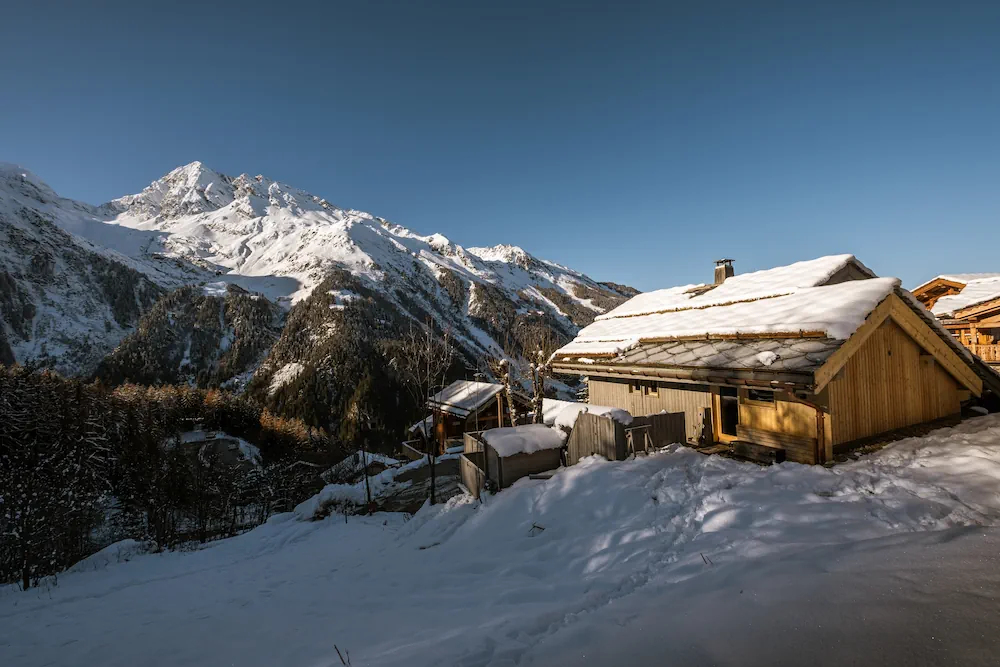
Sainte-Foy Tarentaise is situated amongst some of France's most famous ski areas. Large and well-known ski resorts such as Val d'Isère, Tignes and Les Arcs are all nearby, yet despite its geographical location, Sainte-Foy remains something of a hidden gem.With around 43 kilometres of pistes and just four chairlifts and two magic carpets for beginners, the ski area is relatively small. However, the limited accommodation capacity and the fact that many visitors to the valley opt for the larger resorts help to keep lift queues very short.
Sainte-Foy is particularly appreciated for its tree skiing and excellent off-piste opportunities. After a snowfall, untouched snow can remain in some areas considerably longer than at the busier neighbouring resorts.
The obvious drawback is the size of the ski area, but for those who do not mind skiing the same enjoyable run several times and value quality over the number of kilometres of pistes, Sainte-Foy is a very appealing option.
4. Val Cenis, France
Val Cenis is located in the Haute-Maurienne Valley, close to the Italian border, and offers an impressive 125 kilometres of pistes. Despite the size of its ski area, it has not received the same international attention as many of the larger French ski resorts.The ski area extends from approximately 1,300 to 2,800 metres above sea level and is spread across several traditional Alpine villages. There is everything from long and very easy green runs to considerably more challenging skiing higher up the mountain.
The lift system has been gradually modernised, and for much of the winter it is possible to get plenty of runs in without having to spend much time in lift queues. However, visitor numbers increase noticeably during the French school holidays, so it is worth checking when these take place before booking your ski holiday.
5. Monterosa Ski, Italy
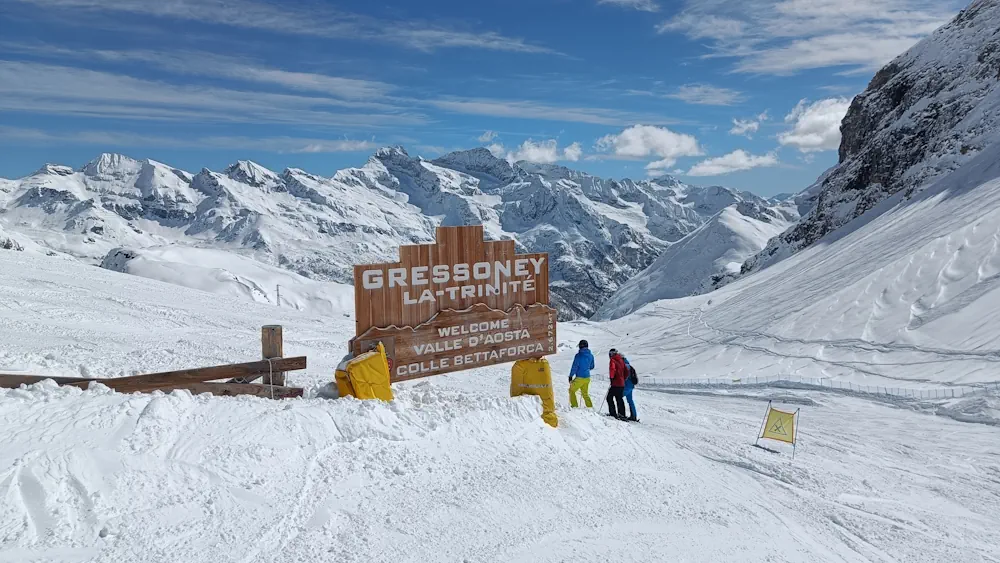
The Monterosa Ski area connects the three valleys where the ski resorts of Champoluc, Gressoney-La-Trinité and Alagna Valsesia are located. This is one of Italy's more impressive ski areas, not least because of the spectacular scenery surrounding the Monte Rosa massif.Despite the size of the area and the excellent skiing it offers, visitor numbers are often lower than at many of the better-known ski resorts in the Dolomites. Particularly on weekdays outside the Italian school holidays, there is a good chance of finding almost deserted slopes.
It should be mentioned that there are some bottlenecks at the lifts connecting the three valleys. The area also attracts many Italian weekend skiers from both Turin and Milan, meaning that the difference between weekdays and weekends can be considerable.
For those who want to ski long, challenging red runs in an authentic Alpine setting without spending too much time in lift queues, Monterosa Ski is one of the most attractive options in the Alps.
6. San Martino di Castrozza, Italy
Many people travelling to the Dolomites choose ski resorts such as Canazei, Corvara and Selva di Val Gardena, with direct access to the famous Sella Ronda, where you can ski around the entire Sella massif via an interconnected system of lifts and pistes. However, there are also plenty of other ski resorts within the wider Dolomiti Superski area where visitor numbers can be considerably lower.San Martino di Castrozza is one such example. Together with Passo Rolle, which is naturally also a good option, it offers around 60 kilometres of pistes and 24 lifts, all in a spectacular setting with beautiful views of the dramatic peaks of the Pale di San Martino.
As the resort has no direct connection to other major ski areas in the central Dolomites, it also avoids much of the skier traffic that can create long queues at certain connecting lifts.
There is also plenty of enjoyable tree skiing, well-groomed pistes and mountain restaurants of the high standard that many associate with Italian ski resorts.
7. Grimentz-Zinal, Switzerland
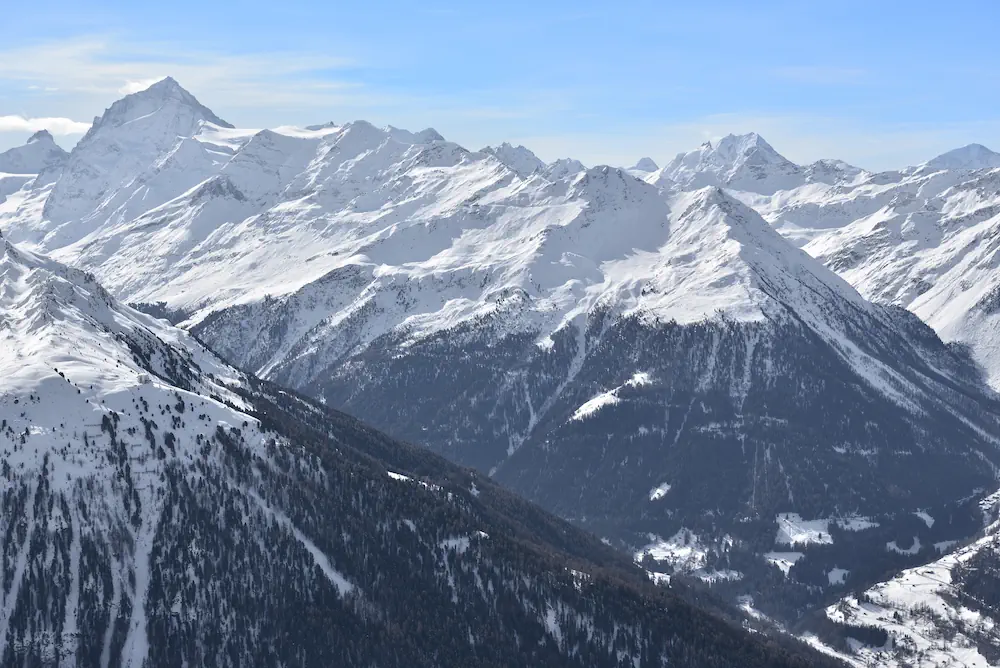
In the Swiss canton of Valais lie Grimentz and Zinal, two traditional Alpine villages that together offer around 115 kilometres of pistes. The villages are connected by the lift system, and the skiing reaches altitudes of approximately 2,900 metres.The ski area is particularly well suited to experienced skiers who appreciate varied terrain, long runs and excellent off-piste opportunities. On weekdays outside holiday periods, the slopes can be very quiet, although queues do occur on busy weekends and after heavy snowfall.
Despite its proximity to much better-known ski resorts such as Verbier and Zermatt, Grimentz-Zinal has retained much of its original character. Grimentz is also one of the most picturesque Alpine villages in Switzerland, with its old dark wooden houses and narrow village streets.
8. Saint-Luc-Chandolin, Switzerland
On the other side of Val d'Anniviers, the valley where Grimentz and Zinal are located, you will find Saint-Luc and Chandolin. The two villages share a ski area with around 60 kilometres of pistes and skiing at altitudes of up to approximately 3,000 metres.The lift system is not as modern as those at many of the major ski resorts in the Alps, but the lower number of visitors means that you can still make the most of your day on the slopes. The high-altitude and largely sunny slopes make the area particularly attractive towards the end of winter.
This is a ski resort for those who are happy to forgo extensive entertainment options, lively après-ski and hundreds of kilometres of pistes in exchange for a quieter ski holiday. For those who appreciate authentic Swiss Alpine villages and skiing without constant crowds, Saint-Luc-Chandolin is well worth considering.
When Are Lift Queues Shortest in the Alps?
Choosing the right week to travel can actually be more important than choosing the right ski resort. Even some of the busiest ski areas in the Alps can feel surprisingly deserted at the right time of year.Generally speaking, the following periods are good for those who want to avoid lift queues:
- Mid to late January, once the Christmas and New Year holidays are over.
- The weeks in March immediately after the main European winter school holidays have ended.
- The first half of December at high-altitude ski resorts, provided that enough lifts and pistes have opened.
- April at high-altitude ski resorts, with the exception of the Easter weekend and Easter school holidays.
The French school holidays are particularly important to keep an eye on, as the country is divided into different school holiday zones. This means that the winter holidays are spread over several weeks. German, British and Dutch school holidays can also have a major impact on visitor numbers in the Alps.
How to Avoid Lift Queues Even at Popular Ski Resorts
If you still want to visit one of the large and well-known ski resorts in the Alps, there are several ways to reduce the amount of time you spend in lift queues.Try to be at the lift as soon as it opens in the morning and avoid the main connecting lifts during the morning. It is also worth studying the piste map in advance to identify less frequented parts of the ski area. The outskirts of large ski areas are often considerably quieter than the popular main routes.
Another good trick is to have lunch earlier or later than the majority of skiers. Between midday and 2 pm, both lift queues and congestion on the slopes can decrease noticeably as many other skiers are having lunch at the mountain restaurants.
At ski resorts where most tourists book accommodation from Saturday to Saturday, Saturday can also be one of the best skiing days of the week, as many guests are travelling to or from the resort. However, at ski resorts that attract many local day visitors, the opposite can be true.
More Kilometres of Pistes Do Not Always Mean More Skiing
When comparing ski resorts, it is easy to focus too much on the number of kilometres of pistes, but how much skiing you actually get out of a day is just as important, if not more so.Imagine completing 20 runs during a day of skiing. If you can reduce the average waiting time at each lift from ten to two minutes, you save a full two hours and 40 minutes of queuing. A ski holiday at a smaller and quieter resort can therefore, in practice, mean considerably more skiing than a holiday at one of the world's largest ski areas. And perhaps that is the greatest luxury of all on a ski holiday - being able to spend your days skiing rather than waiting to do so.